The daily rate is not the whole cost. A cheap excavator without a capable operator, one that breaks down for two days with no replacement, or one whose transport is charged both ways can end up costing more than a pricier machine. Here are ten questions to ask any rental provider in Buraydah, Unaizah and Ar Rass before you sign.
1. What size does your job need?
The wrong size wastes money both ways: a large excavator on a small job costs more and struggles to move around the site, while a small one on deep excavation drags the schedule.
- Mini (roughly under 6 t): utility trenches, work inside neighbourhoods and tight spaces.
- Mid-size (roughly 13–25 t): most excavation, foundation and backfill work on projects.
- Large (30 t and above): deep excavation, high volumes and loading trucks.
2. Hourly, daily or monthly?
Ask: how many hours make a "day"? How are extra hours charged? Does a monthly rate include Fridays? Monthly is usually cheaper for continuous work — just make sure the included hours cover your job.
3. With or without an operator?
If an operator is included: who pays for wages, housing and meals? Does the operator hold an equipment operating licence and a training certificate you can verify? A weak operator burns more fuel and raises accident risk. At ROVQ every operator certificate has a verification link.
4. Who pays for fuel, and how is it measured?
Agree who refuels, how fuel is recorded (invoice or meter), and whether the machine is returned at the same tank level. Fuel is one of the biggest costs, and ambiguity about it causes most disputes.
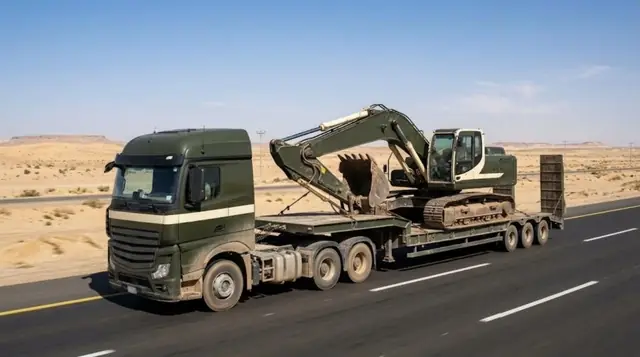
5. Is lowbed transport included?
Moving the excavator to site and back costs money, especially between Buraydah and the surrounding towns. Ask: included or separate? One way or both? Who handles transport permits?
6. What condition is the machine in?
Ask for an inspection report before handover: hour-meter reading, leaks, tracks or tyres, bucket and teeth, plus photos. The report protects you from disputes when you return it.
7. What happens if it breaks down?
The most important question and the one most people forget: how many hours to repair it or bring a replacement? Are downtime days deducted from the rent? Put the answer in the contract.
8. Insurance and liability
Who is liable if underground services are hit or a third party is damaged? Is the machine insured? Before digging, check the site's utility drawings.
9. Attachments
Do you need a different bucket size or a hydraulic breaker for rock? Ask whether they are available and what they cost — some sites in Qassim need them unexpectedly.
10. Contract and invoice
A written contract covering duration, hours, fuel, transport, breakdowns and cancellation, and a tax invoice in your company's name. Any verbal agreement turns into a dispute at the first delay.
The bottom line
The cheapest rate is not always the lowest cost. Compare offers on the same questions — the better deal is usually the one that guarantees availability and a replacement. ROVQ rents equipment in Qassim daily or monthly, with or without an operator, with daily safety inspections. Request one on the rental page or book a call and we'll come back with price and availability.